
![Iraqi Prime Minister-designate Ali al-Zaidi. [Photo/AA]](https://i0.wp.com/www.middleeastmonitor.com/wp-content/uploads/2026/05/thumbs_b_c_cc55fd6a0d41fc7921d1ab9151c4e336-1-1.jpg?fit=920%2C613&ssl=1)
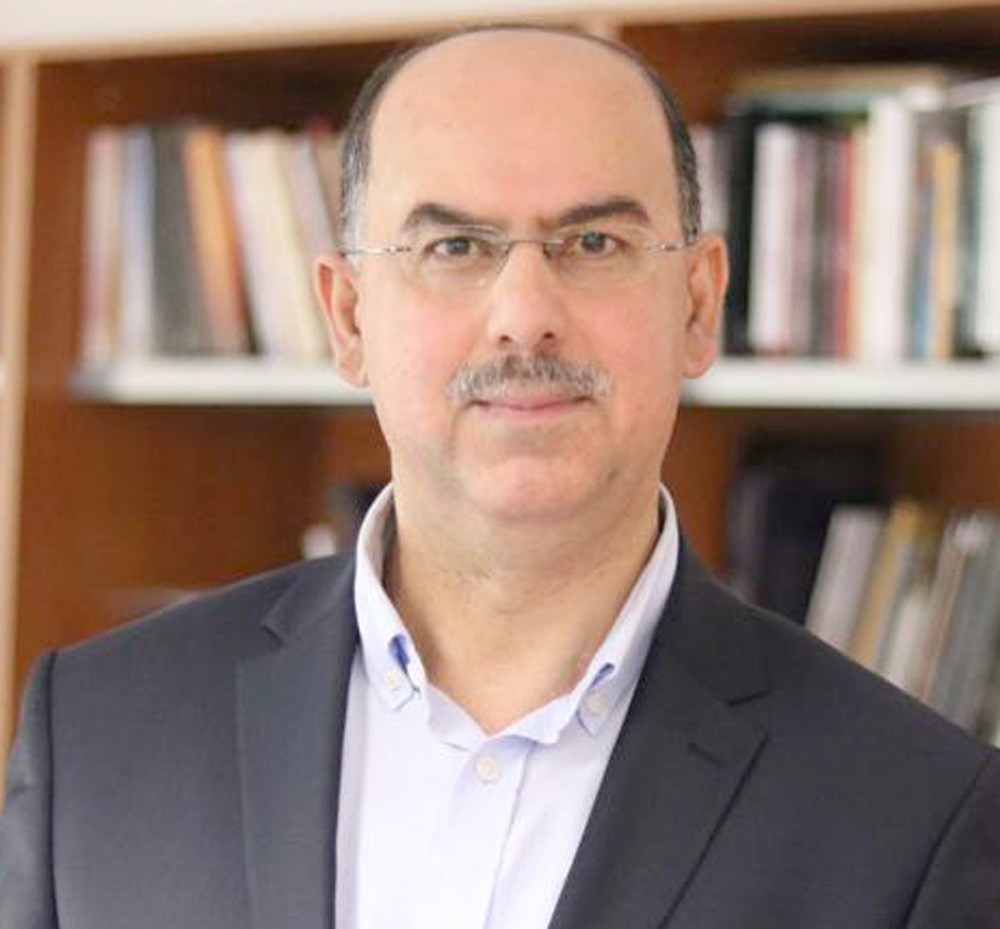
We should at least entertain the theoretical possibility that Iraq’s new prime minister, Ali al-Zaidi, is not a fully formed Iranian proxy in the mold of Nouri al-Maliki or Adel Abdul Mahdi. Imagine the following scenario: al-Zaidi speaks the loud language of reform, but governs with cold pragmatism. His promises to “disarm the militias” and “eradicate corruption” give him moral cover to enact cosmetic adjustments that leave the core machinery of plunder untouched—the very swamp in which his government lives. Parliament, unable to bear the cost of toppling yet another prime minister, cooperates. His media campaigns—from a Washington visit packed with a box of carefully arranged illusions, to an upcoming pilgrimage to Tehran packed with a box of loyalty—are cheap in one crucial sense: they do not alter the structure of power. He knows that Iraq’s political class wants only one thing: positive atmospherics and bright television studios.
Like previous governments that raised the banner of reform and ended up entrenching ruin, al-Zaidi can make Iraqis feel, for a brief moment, that something is moving while everything stays in place.
Then, as elections approach, he will likely tell them that “the problem is not the political system, but certain practices,” without showing genuine anger toward those who hollowed out the state. “Vote for us to complete the reform,” he will say—exactly as Mohammed Shia al-Sudani did. Today, some of the biggest thieves of the state who were arrested under Sudani have turned out to be among his closest associates.
At that point, the Iraqi citizen finds himself defending a system he does not believe in, simply because he sees no clear alternative.
This could happen. So why might we hope it does not? And why might it be better for Iraq if al-Zaidi reveals himself as he is: a weak prime minister, bound by loyalties to the Coordination Framework at home and to foreign patrons abroad, unable to confront militias or break the web of corruption?
Because bad ideas, in the end, must be tested to the point of failure. The corrupt rentier state, as it has been run in Iraq since 2003, is a bad idea. Iraqis will not fix a state that has been turned into spoils, into a farm for militias, into a machine for distributing salaries and sectarian patronage, until they have exhausted all the fake alternatives.
Al-Zaidi is the last available iteration in the long line of post-occupation prime ministers. Let him apply maximum pressure to the status quo as a true believer in continuity: continuity of uncontrolled weapons, continuity of corruption, continuity of dependency. Only then will Iraqis accept real change.
Between Tehran’s defiance and Trump’s volatility: When falsehood becomes political reality
Iraq has already lived through its own version of a sectarian caricature government under Ibrahim al-Jaafari, and then continued along a cumulative path of crises: civil war, the rise of ISIS, the October 2019 protest movement. The ideas we now call “reform” have been on the table for years. But it takes one more crisis, one more failed government, before people finally say: enough. Exhausted states do not embark on painful reforms until circumstances force them to. And Iraq, despite the wreckage, has not yet reached the moment of absolute necessity in which the survival of the system itself becomes impossible.
The best-case scenario under al-Zaidi is that he is less subservient than many fear, and succeeds in slightly polishing the face of the regime. That would mean more years of drift: Iraq is not collapsed enough to trigger radical change, and not healthy enough to produce satisfaction.
The more likely outcome is his spectacular, predictable failure—on a scale that might finally grant his successor, if he comes from outside this ruling class, the mandate to pursue comprehensive reform.
We should remember how grave the situation already is. Iraq has not known a truly balanced budget in decades; everything rests on oil rents and spending that produces clients, not a state. Public debt is swelling. Hidden unemployment is swelling. Spending on salaries and subsidies devours any chance of building infrastructure or a productive economy. Militias possess more weapons, money, and influence than state institutions. Corruption is no longer a phenomenon; it is a system. Yet many, including al-Zaidi, still believe the problem can be solved through “administrative reform” and “anti-corruption campaigns” led by committees with no teeth.
READ: For the first time, money is not the issue
It is hard to refute this illusion because it functions more like a political incantation than a serious program. All that can be done is to wait until rentier spending, militia power, and institutional erosion reach a breaking point.
So let Ali al-Zaidi do what he does: foreign trips, reassuring statements, promises to disarm forces he does not dare confront, and attempts to please Washington and Tehran at the same time. Let him test how long the system can continue living on the edge of the cliff without falling.
The notion that things must get worse before they get better, that the current order must be pushed to its limits to produce its opposite, may sound mechanical, even Hegelian, and certainly harsh. But if I am wrong, tell me: what precedent is there of a corrupt rentier state undertaking proactive economic and political reform? Which state has voluntarily dismantled its own system of graft and uncontrolled arms before being forced to do so by an existential crisis?
Reform does not happen until it becomes unavoidable. So try again, Mr. Prime Minister. Fail again. This time, fail completely—so that Iraq might finally find, in that total failure, the beginning of something different from what it has known over the past two decades.
The views expressed in this article belong to the author and do not necessarily reflect the editorial policy of Middle East Monitor.
 Unless otherwise stated in the article above, this work by Middle East Monitor is licensed under a Creative Commons Attribution-NonCommercial-ShareAlike 4.0 International License. If the image(s) bear our credit, this license also applies to them. What does that mean? For other permissions, please contact us.
Spotted an error on this page? Let us know
Latest news
See all


