
![Abu Khaldun Sati' al-Husri [Wikipedia]](https://i0.wp.com/www.middleeastmonitor.com/wp-content/uploads/2026/09/image-3.jpg?fit=920%2C613&ssl=1)
On a summer day in 1749, Jean-Jacques Rousseau was walking through the streets of Paris when he stumbled upon a question posted by the Academy of Dijon: Has the progress of the sciences and arts contributed to the purification and elevation of morals? It was meant as an intellectual competition, a polite invitation to philosophers and writers. Yet for Rousseau, it was not an invitation at all—it was a jolt, a moment of existential interruption.
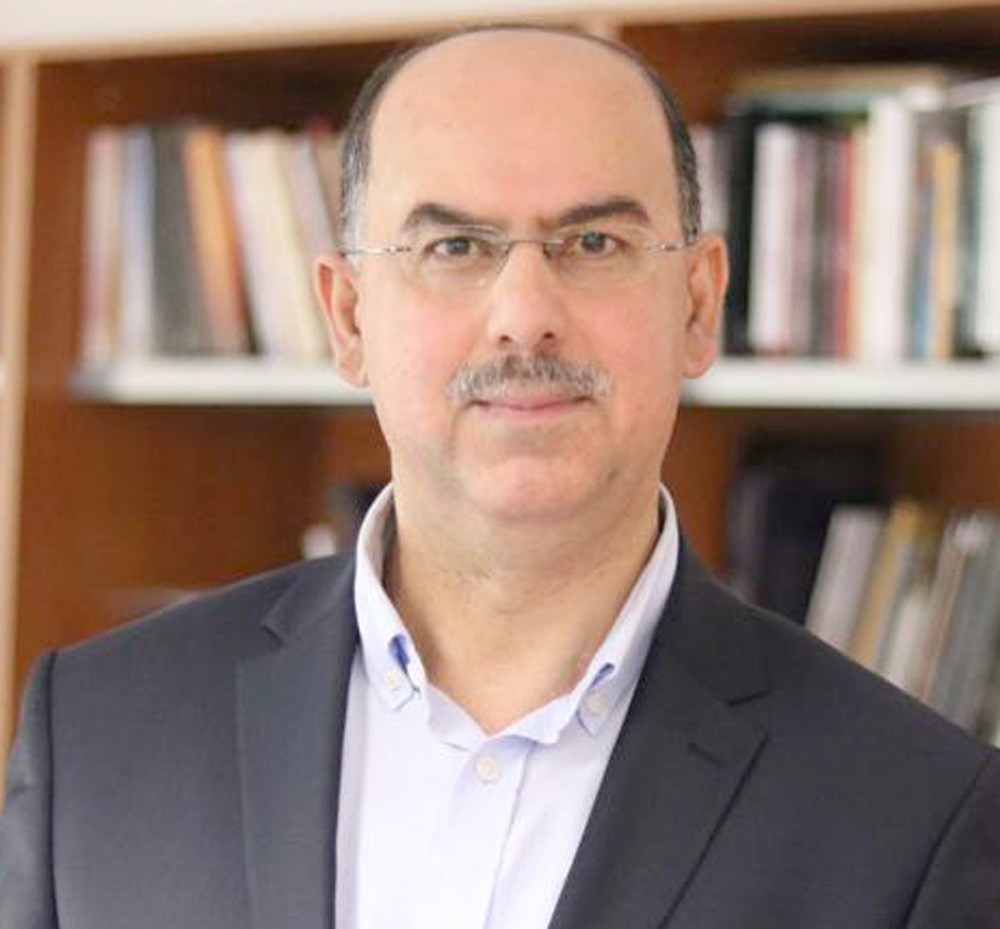
The Iraqi historian and educational reformer Sati’ al-Husri, in his 1951 book “Opinions and Discussions on Science, Morality, and Culture,” describes that moment as a spark that pierced Rousseau’s life. The question, he writes, struck Rousseau not as a scholarly prompt but as a slap that awakened his mind from its slumber. Revisiting al-Husri today is not merely an academic gesture; it is a reminder of how questions can reorder the world. And in a bitter contemporary twist, Iraq’s sectarian decay has tried to recast al-Husri through its own narrow instincts—reducing a man who devoted his life to the idea of a civic nation into raw material for identity conflicts.
This distortion itself is evidence of how modern platforms do more than transmit ideas; they reshape them according to the desires of fragmented communities, turning morality into a tool of struggle rather than a shared value.
Rousseau stood frozen in the street, sensing that the world celebrating the triumph of reason might in fact be drifting away from the human core. From that moment came his famous essay—an intellectual earthquake that unsettled Europe. He argued that scientific advancement does not necessarily elevate moral life, and that knowledge can inflate vanity more than virtue. As al-Husri notes, this was the birth of a new moral question: Can progress be a disguised form of decline?
Nearly three centuries later, the question returns to us transformed. It is no longer about the rise of sciences and arts in the eighteenth century, but about the unprecedented acceleration of technology, the ascent of artificial intelligence, and the spread of personal platforms that have turned every individual into a publisher, influencer, and narrative-maker. Like Rousseau, we find ourselves standing in the middle of the road, confronted with a question larger than our capacity for quick answers: Does technological progress elevate morality—or erode it?
READ: Iraq prime minister rejects extension of International Coalition presence beyond 30th September
Artificial intelligence is no longer a tool; it is a partner in thinking, a competitor in creativity, and a mediator in human relationships. To understand this shift, we must examine the nature of knowledge when it becomes effortless.
Today, knowledge is available without labour, creativity is reproducible at the click of a button, and opinion is manufactured by algorithms rather than lived experience. In this context, the warning of Harvard philosopher Michael Sandel becomes essential: the danger of technology, he argues, is that it “weakens the sense of moral deservingness,” because people no longer feel that what they produce is the result of effort or virtue, but of a system that works on their behalf.
To grasp how technology reshapes virtue itself, we need another lens—one that explains the moral consequences of speed. Here, the work of Edinburgh philosopher Shannon Vallor is indispensable. Modern technologies, she writes, “reshape human virtues by accelerating everything: judgment, anger, desire, and decision.” Speed is not a technical feature; it is a moral force that rewrites behaviour, turning reactions into decisions and decisions into impulses.
Personal platforms have created a new moral landscape—one in which virtue is measured by follower counts, honesty by virality, and wisdom by its ability to become shareable content. Social psychologist Jonathan Haidt captures this transformation succinctly: social media “turns morality into a public performance,” making people more invested in appearing moral than in being moral. Rousseau feared that virtue would become a social mask; today, it has become a digital one.
Artificial intelligence has no morality, but it has immense power to shape human morality. Technology simplifies life but complicates responsibility. AI produces knowledge but weakens human ownership of that knowledge. Platforms bring people closer but deepen moral fragmentation. As Oxford’s Nick Bostrom argues, AI “forces us to redefine morality—not because the machine is moral, but because humans increasingly rely on it to make moral decisions.”
And so we return to the question from Dijon, the one al-Husri revived in 1951 while trying to build an educated Iraq rather than the threadbare Iraq haunted by historical mythologies. But we return to it in a new form: Has the rise of technology and artificial intelligence refined our moral life? The answer is neither yes nor no. The answer is that morality has become more fragile, more in need of reconstruction. Technology is not an enemy, but it is not an automatic ally. It is a force that requires guidance—just as the sciences did in Rousseau’s time—but today it is faster, more pervasive, and more capable of reshaping the human being.
Perhaps the most important thing we can say in this age is an echo of Rousseau himself: Progress becomes virtue only when it carries the human being with it—not when it leaves him behind.
OPINION: Is removing Netanyahu enough to change Israel?
The views expressed in this article belong to the author and do not necessarily reflect the editorial policy of Middle East Monitor.
 Unless otherwise stated in the article above, this work by Middle East Monitor is licensed under a Creative Commons Attribution-NonCommercial-ShareAlike 4.0 International License. If the image(s) bear our credit, this license also applies to them. What does that mean? For other permissions, please contact us.
Spotted an error on this page? Let us know
Latest news
See all


